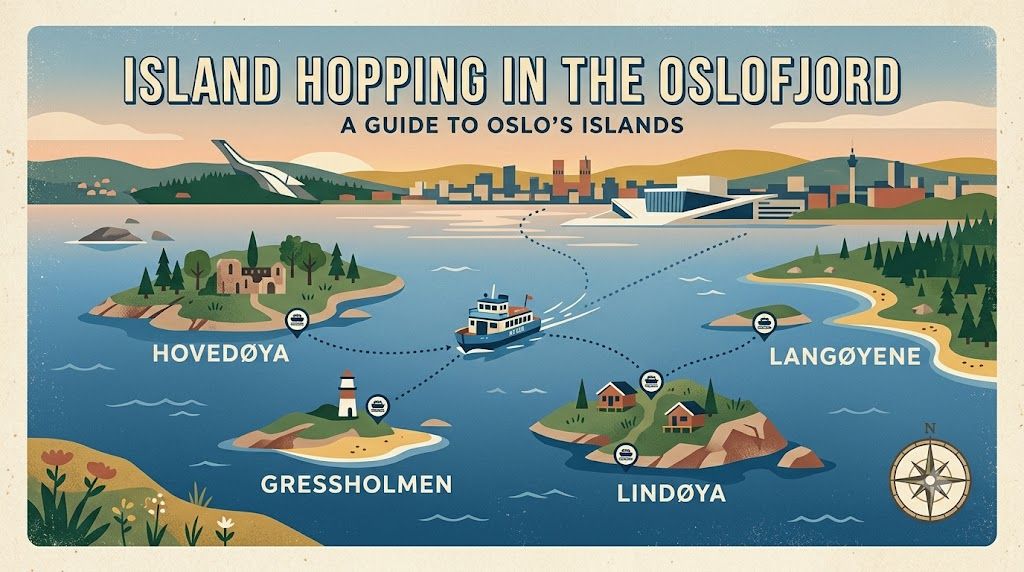
Few capitals can match this: fifteen minutes by boat from City Hall and you're on an island with beaches, monastery ruins and barely a car in sight. In summer, island hopping in the Oslofjord is one of the best and cheapest things you can do in Oslo – a regular Ruter zone 1 ticket is valid on the boats, so the trip costs the same as a tram ride.
Getting out there
The island ferries (lines B1–B4) leave from Rådhusbrygge 4 (City Hall Pier 4), right next to Aker Brygge. They run frequently in summer, but the most popular departures on warm weekend days can fill up – go early if you want to be sure of a spot. Check departure times in the Ruter app on the day, and note when the last boat leaves the island you're on. Outside the summer season (roughly May to September), sailings drop sharply and some islands get only a handful of departures a day, so check the timetable before planning an autumn or winter trip.
Hovedeøya – closest and most popular
Hovedeøya is only a few minutes from the pier and is the classic first-timer island. You'll find the ruins of a Cistercian monastery founded in 1147, good swimming coves on the south side and big lawns for picnics. There's a kiosk by the jetty in summer. The island is a protected landscape area, so stick to the paths and take your rubbish back with you.
Gressholmen and Rambergøya – come for the inn
Gressholmen is joined to Rambergøya by a narrow spit, and together they offer some of the fjord's calmest swimming spots. Gressholmen was actually Norway's first main airport – seaplanes landed here from the late 1920s. Today the draw is Gressholmen kro, an old summer-season inn where you can get food and a cold beer with your feet in the grass. That makes Gressholmen the only stop on the island hop where beer is both legal and served.
Langøyene – swimming and camping
Langøyene, furthest south, is the island for a long stay. It has a big sandy beach, a volleyball court and – uniquely among the fjord islands – permission to camp overnight. For years the island served as Oslo's landfill, but it was fully rehabilitated and reopened in 2021 and is now a clean, well-kept recreation area. There's a kiosk in season, but bring what you need.
Lindøya, Nakholmen and Bleikøya – cabin idyll
The three cabin islands are packed with colourful little summer houses from the interwar years and have an atmosphere all of their own. Fewer facilities, more calm – you'll find smooth rocks and swimming spots along the edges. Walk quietly in the "streets" between the cabins; people live here all summer.
What about the beer?
Let's be honest: Norway has a general ban on drinking alcohol in public places, and that includes the islands. The only licensed venue out in the fjord is Gressholmen kro. So plan your beers around the boat trip: Aker Brygge and Vika, right by the pier, are full of bars and outdoor terraces, but prices there are among the highest in the city. Check the PilsPosten map for Oslo for current prices in the area before you choose – or take the boat back and walk a few blocks into town, where a half-litre quickly gets noticeably cheaper.
Building a full day: a simple itinerary
For a first visit, a good combination is Hovedøya in the morning (monastery ruins, a swim before the crowds arrive), a packed lunch on Gressholmen with a stop at the kro, and finishing back at Aker Brygge in the early evening for food and a drink before heading home. If you want a longer, quieter day, swap Gressholmen for one of the cabin islands – Lindøya or Nakholmen – and bring everything with you, since facilities there are minimal.
Practical tips before you go
Most islands have no shops, so bring water, food and sunscreen. Toilet facilities are basic, barbecuing is only allowed in designated spots, and a disposable grill on bare rock is a classic way to ruin everyone's day – use the barbecue areas. Phone signal is generally fine across all the islands given how close they are to the city. And again: check the last departure. Standing on Langøyene at ten in the evening with no boat home is an experience you can do without.
Frequently asked questions
Do I need a special ticket for the island boats? No – a standard Ruter zone 1 ticket or day pass covers it, the same as buses, trams and the metro.
Can I swim at all the islands? Yes, all of them have swimming spots, though Langøyene has the biggest sandy beach and Hovedøya and Gressholmen have the calmest coves.
Is it worth visiting outside summer? The ruins and views are there year-round, but swimming, kiosks and the kro at Gressholmen are seasonal, and boat frequency drops a lot outside May–September. Summer is genuinely the best window.
Can I bring my own alcohol to drink on the islands? No – Norway's public drinking ban applies on the islands as everywhere else outside licensed premises. Gressholmen kro is the one exception where you can buy and drink beer legally.
Prices and offers at the bars around Aker Brygge change through the season – see the live overview of bars and beer prices in Oslo on PilsPosten before you head out.